Norman Rockwell
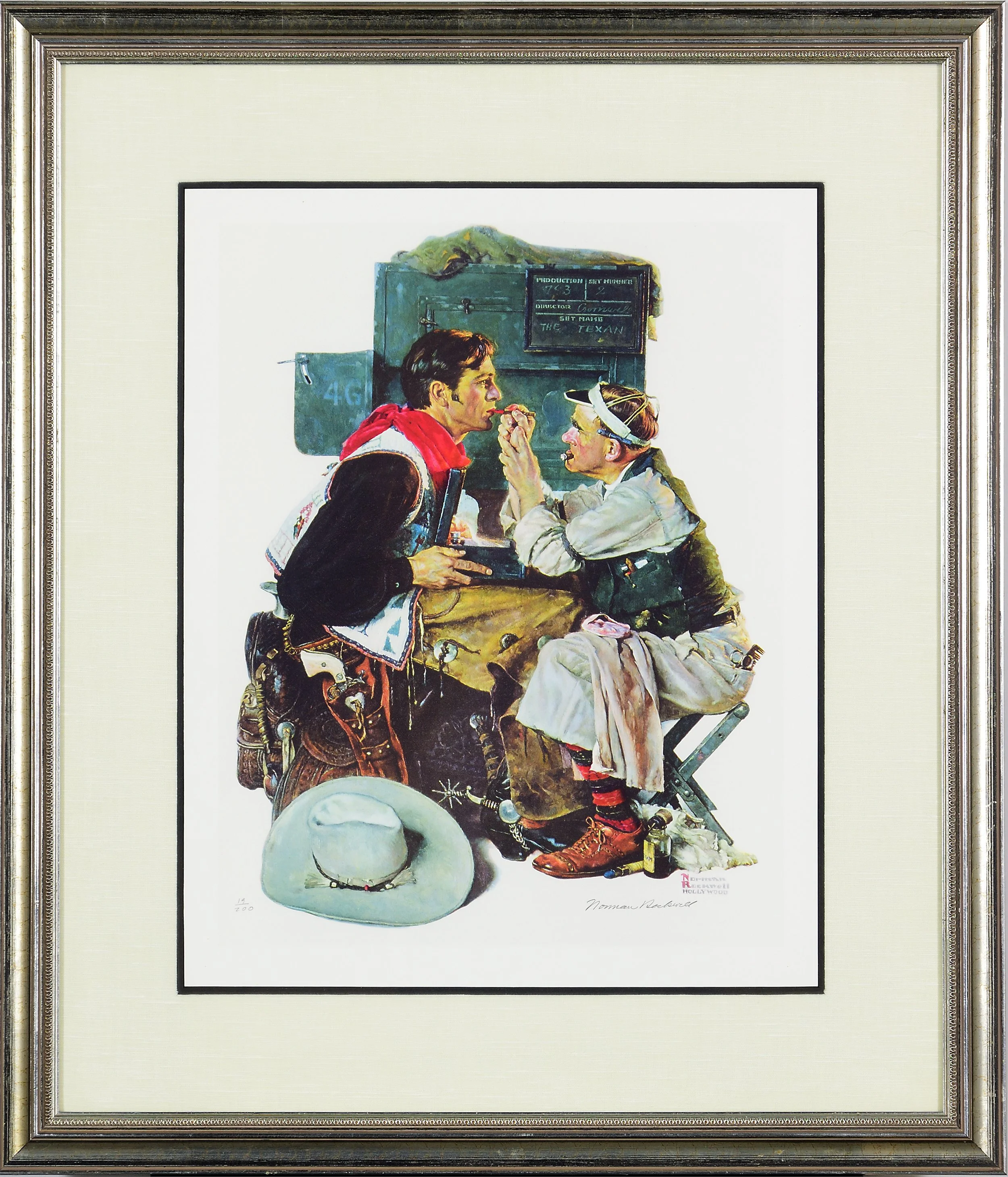
Norman Rockwell
The Texan
1973
Lithograph 19/200
25 x 20 inches
37 x 32 inches in the frame
Signed Lower Right
ID: DH5315
Norman Rockwell (1894–1978) was born in New York City and showed prodigious drafting talent from an early age, enrolling at the National Academy of Design and later the Art Students League before landing his first major commission at just eighteen. By twenty-two he had secured cover assignments at "The Saturday Evening Post", beginning a relationship that would last 47 years and produce 321 covers. Working from his studios in New Rochelle and later Arlington and Stockbridge, Vermont, Rockwell developed a meticulous working method — exhaustive reference photography, detailed charcoal studies, and careful staging of live models — that gave his illustrations an almost cinematic specificity. His ability to distill complex American social moments into a single emotionally legible image made him the most widely reproduced artist in the country for the better part of four decades.
Rockwell's reputation during his peak years was paradoxical: universally beloved by the public, largely dismissed by the fine art establishment. Abstract Expressionism dominated critical discourse in the postwar decades, and Rockwell's commitment to narrative figuration and sentimental subject matter placed him firmly outside the conversation that mattered to museums and critics. He understood this and was privately ambivalent about it — he once described his own work as depicting "the America I knew or imagined." Yet some of his most significant paintings cut against the nostalgic grain. "The Problem We All Live With" (1964), depicting Ruby Bridges being escorted to school by federal marshals, and the "Four Freedoms" series (1943) were painted in response to FDR's 1941 address — demonstrated that Rockwell could deploy his populist visual language in direct service of urgent moral and political content.
His critical rehabilitation accelerated in the 1990s and has continued since. The 2001 Guggenheim traveling exhibition "Norman Rockwell Pictures for the American People" was a turning point, forcing serious reconsideration of his technical accomplishment and cultural significance. Scholars began examining his paintings as primary documents of mid-century American identity were complex, constructed, and often subtly anxious beneath their cheerful surfaces. The Norman Rockwell Museum in Stockbridge, Massachusetts holds the largest collection of his original work and remains the primary scholarly resource on his life and output. Today Rockwell occupies a more secure position in American art history: not merely an illustrator, but a painter whose command of narrative, light, and human expression places him in legitimate dialogue with the great figurative tradition he spent his career quietly honoring.
Quisque iaculis facilisis lacinia. Mauris euismod pellentesque tellus sit amet mollis.