Ferdinand Barbedienne
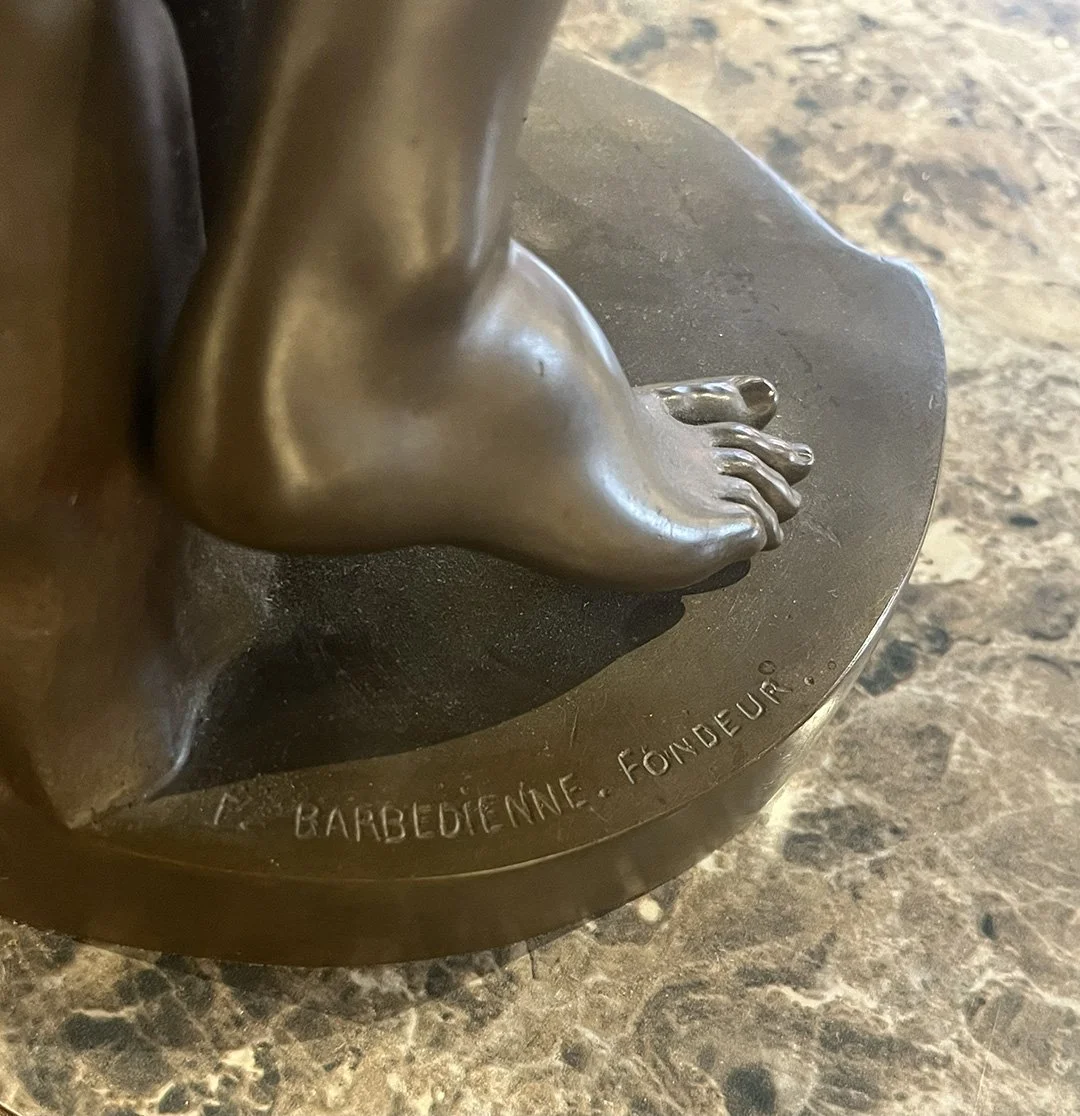
Ferdinand Barbedienne
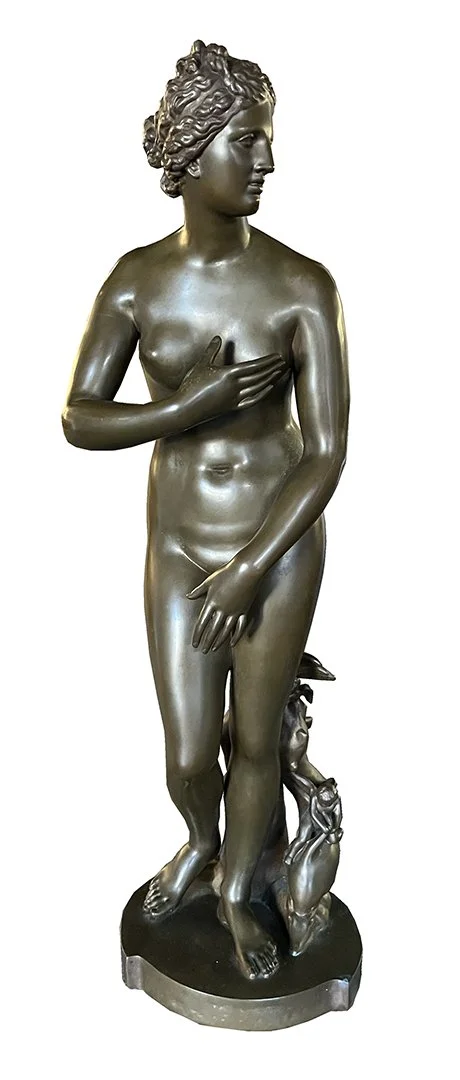
Venus de Medici
Bronze
25 x 8 x 6 1/2 inches
Signed on Base
ID: DH5189
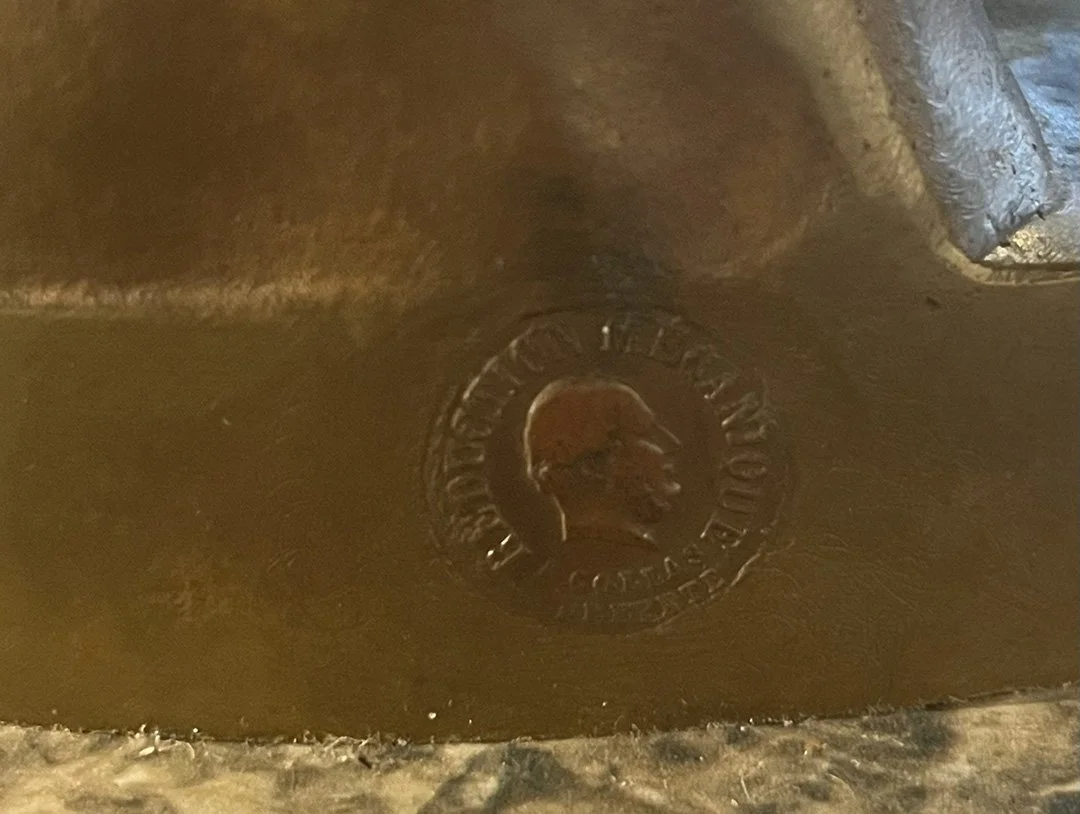
This sculpture depicts the Greek goddess of love, Aphrodite. This is a reproduction of the famous marble sculpture housed in Uffizi Gallery, Florence, Italy. The reverse also bears the seal stamp mark of Achilles Collas whose invention allowed the accurate reduction in scale of monumental classical sculptures manufactured in partnership with the foundry of Ferdinand Barbedienne.
______________________________________________________
Ferdinand Barbedienne (1810–1892) was born on August 6, 1810, in Calvados, France, and rose from modest beginnings to found one of the most influential bronze foundries of the 19th century. After early success as a wallpaper manufacturer, he transformed the art world in 1838 through his partnership with Achille Collas, inventor of a revolutionary mechanical reduction process that allowed sculptures to be reproduced at smaller scales with extraordinary fidelity. Operating first as Collas & Barbedienne and later simply as Barbedienne, the firm popularized bronze reductions of antiquities and museum masterpieces while also editing works by contemporary artists. By mid-century, the foundry had expanded into high-quality decorative arts and earned international acclaim, exhibiting at every major World’s Fair and receiving numerous medals, including a Gold Medal at the 1855 Paris Exposition and top honors in multiple categories at London’s 1862 International Exhibition.
Barbedienne’s innovations democratized art, making important sculptural works accessible to households across Europe, and he collaborated with many of the era’s leading sculptors, including Antoine-Louis Barye, Emmanuel Fremiet, Antonin Mercié, and Henri Chapu. Despite a brief wartime shift to arms production during the Franco-Prussian War, the foundry remained a dominant force in bronze casting, documented most famously in its 1886 catalogue. Barbedienne died in 1892 and was memorialized with an elaborate tomb at Père Lachaise, symbolizing the union of Art and Industry. Succeeded by his nephew Gustave Leblanc, the firm, later known as Leblanc-Barbedienne, continued operations until 1952 and went on to collaborate with artists such as Auguste Rodin.
Quisque iaculis facilisis lacinia. Mauris euismod pellentesque tellus sit amet mollis.